
Choosing the Perfect Granite

Choosing the Perfect Granite

Choosing the Perfect Granite

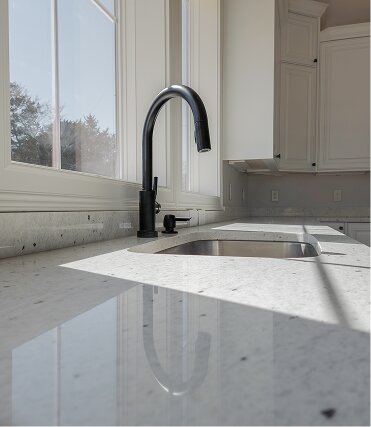
Walking into a stone yard for the first time can feel incredibly overwhelming. You are surrounded by massive, towering slabs of rock, each one covered in wild patterns, deep colors, and glittering minerals. It’s easy to fall in love with a slab based on looks alone, but choosing the perfect granite for your kitchen or bathroom renovation requires balancing aesthetics with a little bit of practical strategy.

Because granite is a 100% natural stone sliced straight out of the earth, no two slabs are identical. Here is a practical, step-by-step guide to finding the one that belongs in your home.

1. Understand Your Pattern Personality

Granite patterns generally fall into three distinct visual categories. Knowing which one fits your style will help you instantly filter out half the showroom:

  • Solid/Consistent: These slabs have a very uniform pattern with minimal variation. If you love a clean, modern, or minimalist look, consistent granite gives you the durability of natural stone without visual chaos.
  • Speckled: The classic granite look. These slabs are packed with small, interlocking mineral crystals that create a finely detailed, textured appearance. They are legendary for hiding crumbs, dust, and minor spills.
  • Veined (Marbled): Some premium granite slabs feature long, sweeping lines of color called veins, closely mimicking the elegant look of marble. These make an incredible focal point, especially on a large kitchen island.

2. Bring Your “Home Homework” to the Yard

Never go granite shopping empty-handed. Lighting in a massive, warehouse-style stone yard is drastically different from the warm lighting in your home. To make sure your stone actually matches your design, fill a bag with these essentials before you leave:

  • A sample door of your kitchen cabinets.
  • A tile or swatch of your planned backsplash.
  • A sample of your flooring (wood plank, tile, etc.).
  • A paint swatch of your wall color.

Hold these samples directly against the vertical slabs. A granite that looks crisp and bright under industrial warehouse lighting might look surprisingly yellow or muddy when paired with your specific cabinet color.

3. Choose the Right Thickness and Edge Profile

The physical cut of the stone affects both your budget and the final vibe of the room.

Feature Standard Option (3cm) Thin Option (2cm)
Durability High; requires no plywood support Medium; needs structural support underneath
Best For Kitchen counters, high-traffic zones Bathrooms, backsplashes, low-traffic
Look Luxury, substantial weight Sleek, modern, or budget-friendly

Once you pick a thickness, consider the edge profile. Standard edges like Eased (slightly rounded square) or Beveled are timeless and included in the base price. Elaborate edges like an Ogee (an elegant S-curve) look beautiful in traditional kitchens but will add to your fabrication costs.

4. Always View the Actual Slab (And Check for Flaws)

When you order quartz, you buy from a sample booklet. When you buy granite, you must lay eyes on the exact slab being delivered to your house. A tiny 4×4-inch sample cannot accurately represent a 10-foot piece of natural earth.

Ask the fabricator to pull your specific slab into the light. Look out for:

  • Fissures vs. Cracks: Fissures are naturally occurring, hairline separations between mineral crystals that are perfectly safe. Cracks run completely through the stone and can compromise its structure. Run your fingernail over them—if it catches deeply, ask questions.
  • Color Clustering: Sometimes minerals pool together, creating a massive dark or light spot right in the middle of a slab. Make sure you like where those unique marks sit.

The Golden Rule of Fabrication: Ask your installer to do a “template layout” with you. This lets you choose exactly which part of the slab becomes your main countertop, and which part gets cut out for the sink hole!

Choosing granite is an investment that easily lasts for decades. Take your time, trust your design samples, and enjoy the process of finding a piece of natural history for your home!
The 2026 Kitchen Design Guide

The 2026 Kitchen Design Guide

The 2026 Kitchen Design Guide: Saying Goodbye to the Sterile Exhibit, Hello to “Lived-In Luxury”

If the kitchens of the early 2020s felt a bit like high-end medical clinics, all stark white surfaces, flat glossy plastics, and blinding overhead spotlights, 2026 is the year we officially get our souls back.

This year, kitchen design has taken a massive turn toward warmth, deep character, and high-functioning layout strategies. We are designing kitchens that act less like museums and more like secondary living rooms: comfortable, layered spaces where people actually want to hang out, while clever storage quietly hides the mess of real life.

If you are planning a renovation or building a home this year, here are the dominant design pillars defining the 2026 kitchen.

1. Wood Cabinetry Crowned King (Goodbye, All-White)

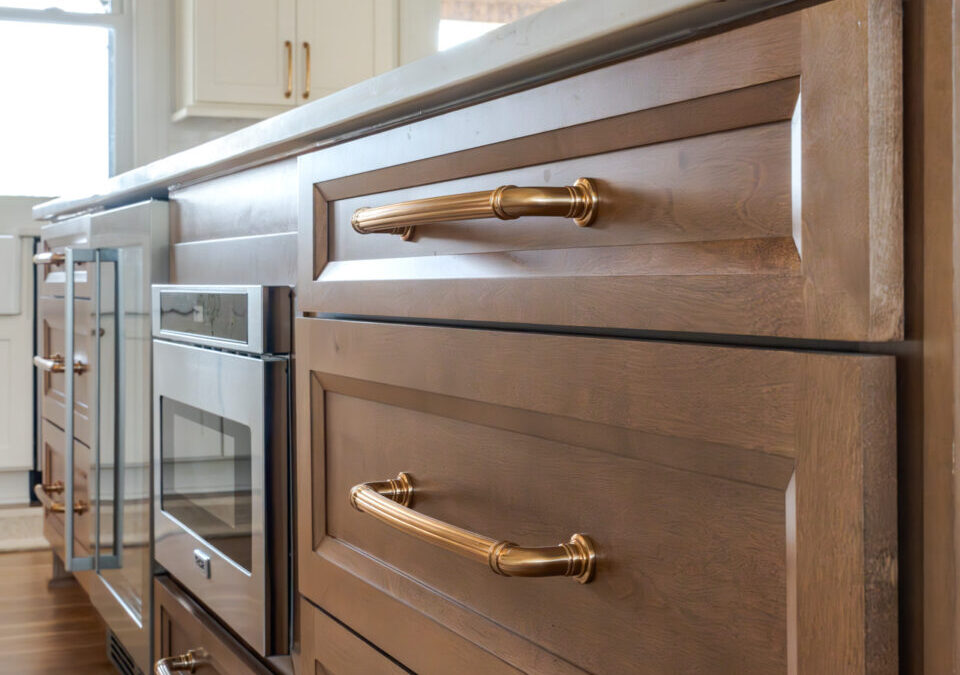
For the first time in over a decade, painted white cabinets have officially been dethroned. Natural wood grain is leading the charge, bringing instant architectural warmth and texture into the home.

  • The Woods of Choice: Medium-toned walnut and soft, wire-brushed white oak are the top requests.
  • The Trend Evolution: Instead of the hyper-modern, completely seamless panels of a few years ago, we’re seeing a return to classic Shaker profiles or cabinets with micro-beading and furniture-leg details. It gives the space a collected-over-time, heirloom feel rather than a “flat-pack catalog” look.

2. The Rise of “Workhorse” Multi-Functional Islands

The kitchen island is no longer just an empty slab of stone with two barstools. In 2026, it is the mechanical heart of the room. Designers are scaling islands larger than ever, often exceeding 7 or 8 feet, and pack them with functionality.

  • Integrated Appliances: Over 50% of modern renovations are moving primary appliances into the island, including drawer-style microwaves, secondary dishwashers, and dedicated under-counter wine storage.
  • Material Mixing: Instead of matching the island stone to the perimeter countertops, the 2026 look heavily embraces contrast. It’s incredibly popular to use a rich, dramatic stone on the wall counters while topping a wood island with a warm butcher block or a deeply veined quartzite.

3. Storage is the Strategy: Hidden Pantries & Back-Kitchens

The secret to keeping a highly textured, beautiful kitchen looking clean? Designing a secondary zone to handle the actual mess. Homeowners are prioritizing functional floor plans over raw square footage, resulting in a massive surge in appliance garages, sculleries, and butler’s pantries.

  1. Map out the ‘Hidden Zones’ (Step 1: Structural Layout): Incorporate a walk-in scullery or a pocket-door appliance garage. This gives your high-traffic appliances (coffee makers, blenders, air fryers) a permanent home off your main counters.
  2. Introduce Organic Warmth (Step 2: Color Palette): Ditch the cool grays and stark whites. Build your palette around earthy neutrals: mushroom, taupe, soft sand, clay, or a rich mossy green for the base cabinets.
  3. Select Your Art Piece Stone (Step 3: Focal Surfaces): Because cabinetry lines are cleaner, your stone has to do the heavy lifting. Look for highly expressive, heavily veined stones like Taj Mahal Quartzite or engineered quartz with bold, deep-flowing veins that snake up the wall as a full-slab backsplash.
  4. Layer the Ambiance (Step 4: Lighting Strategy): Do not rely purely on recessed ceiling cans. 2026 is all about under-cabinet LED tracks, under-counter island rim glows that emphasize wood texture, and unexpected decorative touches like a petite, dimmable fabric lamp sitting cozy on the counter next to your cookbooks.

4. What’s OUT in 2026 (Trends to Skip)

To keep your kitchen investment from feeling dated by the end of the decade, designers suggest steering clear of these oversaturated fads:

Out of Style What’s Replacing It Why the Shift?
Fully Fluted Islands Smooth curves / solid wood trim Cleaning dust out of dozens of tiny vertical wood grooves proved to be a practical nightmare.
Oversaturated Farmhouse Transitional/Modern Traditional Shiplap and heavily distressed, faux-aged finishes are giving way to cleaner, authentic hand-craftsmanship.
Matte Black Hardware Brushed Bronze, Antique Brass, Pewter Matte black can feel flat and industrial. Living finishes that form a soft patina over time add “Quiet Luxury.”
Open Shelving Overload Glass-front cabinets / Solid doors While gorgeous on social media, open-shelving kitchens require constant dusting and unmatched dishes look instantly messy.

The 2026 Takeaway: Design for how you actually live. The most stylish kitchen this year isn’t the one that looks the most pristine, it’s the one that feels cozy, uses natural, durable materials, and cleverly keeps daily clutter completely out of sight.

Precision in Fabrication

Precision in Fabrication

Beyond the Slab: Why Precision Fabrication Makes or Breaks Your Countertop Investment

You’ve spent weeks hunting down the perfect stone slab. You hand-selected a breathtaking piece of rock with just the right veining, brought your cabinet samples to the yard, and finally signed on the dotted line. You’re done, right?

Not quite. Finding a beautiful slab is only half the battle. The real magic—the part that determines whether your kitchen looks like a million bucks or a messy DIY project—happens behind the scenes during fabrication.

True precision fabrication is what transforms a massive, raw block of earth into a flawless, custom-fit architectural feature. Here is a look at what happens under the hood when a team uses state-of-the-art tech to cut your stone, and why precision is non-negotiable for a lasting investment.

The Tech That Changes Everything: Digital Templating & SlabSmith®

In the old days, a fabricator would come to your house with strips of balsa wood or cardboard, hot-gluing them together to create a physical template of your cabinets. It worked, but it left a lot of room for human error.

Today, advanced fabricators use a highly sophisticated digital workflow to ensure a perfect result before a blade ever touches your stone.

  1. Digital Laser Templating (Phase 1: Laser Mapping): Instead of physical wood sticks, technicians use high-precision laser scanners to map the exact dimensions, curves, and unique imperfections of your walls and cabinetry. This digital blueprint is accurate down to a fraction of a millimeter.
  2. SlabSmith CAD Mirroring (Phase 2: Virtual Layout): The laser template is imported into specialized CAD software. High-resolution digital photographs of your exact stone slab are captured and loaded into SlabSmith® technology.
  3. Seamless Seam Matching (Phase 3: The Digital Overlay): Using the digital layout, designers can virtually overlay your countertop shape onto the photo of your slab. This lets you see exactly how the stone’s natural veins will flow around corners and seamlessly bridge together at the seams before a single cut is made.

Why Machine-Grade Precision Matters for Daily Life

It is easy to think of fabrication as just “cutting a straight line,” but advanced machinery handles structural nuances that protect your stone for decades.

1. Perfectly Level Cuts Avoid Cracking

Natural stone is incredibly rigid, which means it has very little “flex.” If a countertop is cut with uneven thickness—a common issue when using outdated machinery or poor quality control—the stone won’t sit perfectly flat on your cabinets. Over time, the weight of heavy small appliances or someone leaning on the counter can cause uneven stress points, leading to sudden cracks. CNC cutting equipment ensures completely uniform thickness across the entire run.

2. Tight, Color-Matched Seams

A seam should never be an eyesore. Precision fabrication allows for perfectly straight, razor-sharp edges where two pieces meet. Combined with color-matched epoxy, these tight seams become virtually invisible to the eye and smooth to the touch, preventing dirt and moisture from seeping into the gaps.

3. Smooth, Chip-Free Edge Profiles

Whether you choose a simple eased edge or an elegant, curved Ogee profile, the shaping process requires absolute control. Automated tooling shapes and polishes the edges uniformly, eliminating the micro-chipping that can happen with handheld stone routers.

The Single Facility Advantage: When looking for a stone provider, look for a team that handles everything—templating, fabrication, and installation—completely under one roof. Having full control over the material from the showroom to the final leveling ensures that nothing gets lost in translation between separate subcontractors.

Investing in a premium stone like granite, marble, or quartzite is a lifelong commitment for your home. By prioritizing a fabricator who leverages precision digital tech, you guarantee that the natural beauty you fell in love with in the yard is exactly what perfectly aligns with your kitchen walls.